 listicle
5 Best Deep Cleaning Apartment Checklists for Move In
Table of Contents
- Compare the Top Deep Cleaning Apartment Checklists
- 1. Extra Space Storage: The Room-by-Room Standard
- 2. Bungalow: Best for Eco-Friendly Cleaning
- 3. Redfin: The Hygiene-First Checklist
- 4. Apartments.com: Best for Soft Surfaces
- 5. College HUNKS: Best for Deciding DIY vs. Pro
- What Is Included in a Move Out Cleaning Service
- Essential Cleaning Supplies for New Apartment
- Frequently Asked Questions
Last Updated: September 6, 2026
Moving into a new apartment is exciting, but cleaning every surface left by the previous tenant can be overwhelming. A deep cleaning routine goes beyond a quick sweep; it’s about establishing a hygienic baseline. This guide breaks down the best checklists so you can decide whether to DIY or call in professional help.
The right approach depends on your time, budget, and the unit’s condition. Below, we compare five popular deep cleaning apartment checklists for move in, highlighting strengths and weaknesses. We’ll also cover what is included in a move out cleaning service and how to stock essential cleaning supplies.
Quick Picks:
- Best Overall for Structure: Extra Space Storage’s room-by-room standard
- Best for Eco-Friendly Cleaning: Bungalow’s natural supply guide
- Best for Hygiene: Redfin’s sanitation-first checklist
Compare the Top Deep Cleaning Apartment Checklists
Choosing the right guide is the first step. A good checklist saves time, ensures you don't miss hidden dirt, and helps protect your security deposit. The five options below each bring a different strength.
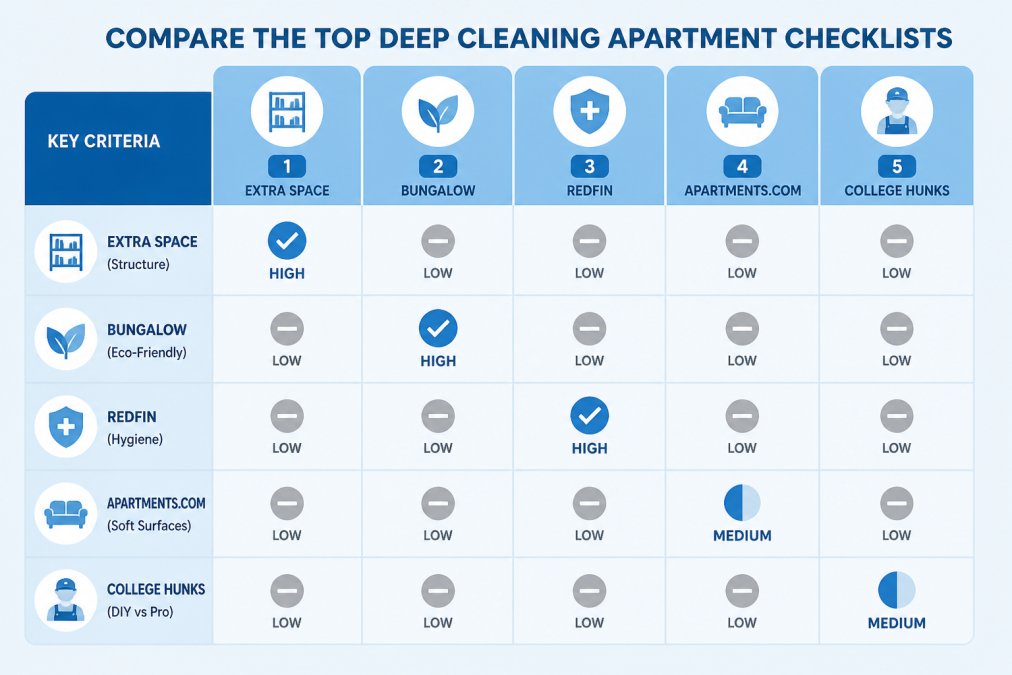
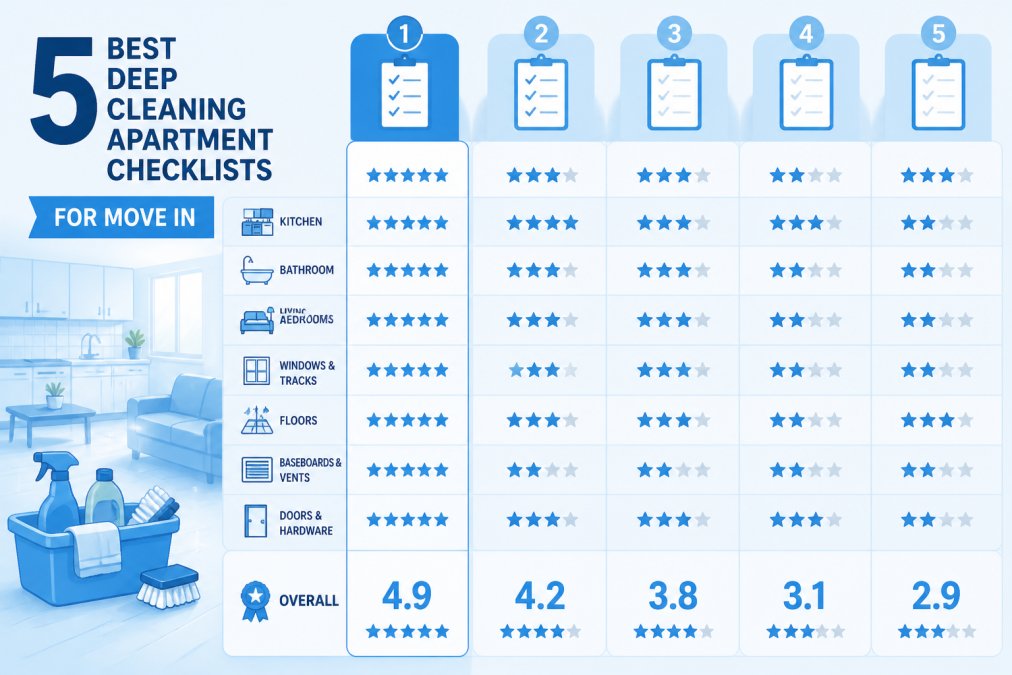
Here’s a quick breakdown of how they stack up:
| Checklist | Best For | Key Focus | Weakness |
|---|---|---|---|
| Extra Space Storage | Beginners needing order | Room-by-room structure | No pro booking |
| Bungalow | DIY & eco-friendly | Natural supplies | Lacks interactive format |
| Redfin | Sanitation standards | High-touch areas | Less deep structure |
| Apartments.com | Comfort & soft surfaces | Furniture & fabrics | Light on appliances |
| College HUNKS | Decision guidance | DIY vs. professional | Promotes their services |
1. Extra Space Storage: The Room-by-Room Standard
For renters who want a structured approach, Extra Space Storage’s guide is the gold standard. It provides a comprehensive digital checklist that walks you through each room systematically, ensuring you don't miss spots like window tracks or baseboards.
It stands out for its attention to often-overlooked areas, including windows, blinds, light fixtures, and ceiling fan blades. It’s easy for beginners because it breaks the monumental task into manageable, room-specific chores.
The main drawback is that it’s purely a DIY resource; you’ll need to look elsewhere for professional help. As a planning tool, it’s unmatched for thoroughness and logical flow.
2. Bungalow: Best for Eco-Friendly Cleaning
If you want to avoid harsh chemicals, Bungalow’s guide is the clear winner. It focuses on natural agents you likely already own, such as white vinegar and baking soda, to achieve a spotless result without toxic residue.
The guide excels at procedural detail, pairing each task with the right tool and emphasizing microfiber cloths and scrub brushes. It’s a detailed approach for DIY cleaners who prefer cost-effective supplies over commercial products.
The one limitation is the lack of an interactive checklist feature; you’ll need to print it or create your own list. For those committed to a green clean, this is the most practical guide available.
3. Redfin: The Hygiene-First Checklist
Redfin’s checklist is designed for tenants who view move-in cleaning as a matter of health. It prioritizes sanitization of high-touch areas, ensuring the apartment meets a high hygiene standard before you settle in.
It provides concise steps for kitchen sink and faucet sanitation, plus protocols for mirrors and glass. The bathroom guidance is particularly effective, focusing on areas most likely to harbor germs. This is the best option for a quick, professional-grade clean.
The trade-off is limited focus on deep-structural tasks like degreasing the oven or scrubbing grout. For heavy buildup, pair this with a more intensive kitchen and bathroom guide.
4. Apartments.com: Best for Soft Surfaces
Most checklists focus on hard surfaces, but Apartments.com addresses the softer side. This lifestyle-oriented guide is perfect for renters who want the place to feel comfortable immediately, covering upholstery to electronics.
It provides techniques for furniture vacuuming and cushion maintenance, plus dusting methods for electronics and shelves, and laundering instructions for curtains and throw pillows. This user-friendly format helps create a fresh, hygienic living space.
Its main weakness is lesser emphasis on heavy-duty appliance cleaning; you won't find steps for descaling the faucet or degreasing the stove hood. Supplement with a more intensive kitchen checklist.
5. College HUNKS: Best for Deciding DIY vs. Pro
Sometimes, the best decision is knowing when to stop. College HUNKS Hauling Junk & Moving offers a guide as much about strategy as scrubbing. It provides expert tips for efficient cleaning, but its standout value is helping you decide when to call in the pros.
The guide offers a realistic look at pre-unpacking strategies. If the apartment is in good shape, you can handle it with supplies and time. If you’re facing years of grime or grease, this checklist helps you recognize that a professional deep cleaning service is the smarter investment.
This expert-backed advice acts as a bridge between DIY and professional services. It’s honest that some situations, like ensuring a spotless result for a picky landlord, are better left to trained teams with commercial-grade equipment.
What Is Included in a Move Out Cleaning Service
Understanding what is included in a move out cleaning service is vital whether you are leaving a rental or want a professional reset. A standard service goes beyond a basic tidy-up to return the property to a pristine, rentable condition. While scope varies by provider, a comprehensive deep clean follows a room-by-room protocol that mirrors what a landlord will inspect.
Kitchen Scope
Professionals treat the kitchen as the highest-priority room due to grease and food residue. The standard scope includes:
- Interior and exterior of appliances: Oven racks are removed and soaked; the oven cavity is degreased; the refrigerator is emptied, shelves are pulled, and all surfaces are wiped down; the microwave turntable and interior ceiling are scrubbed.
- Cabinets and drawers: All fronts are wiped down to remove fingerprints and grease film. Interiors are vacuumed and wiped to clear crumbs and dust. Hardware is polished.
- Sink and fixtures: The sink basin is scrubbed with an abrasive cleaner, and the faucet is descaled to remove hard water spots.
- Backsplash and counters: These are degreased, not just wiped. A common pattern is to use a citrus-based degreaser and let it sit for 3-5 minutes before scrubbing.
- Exhaust hood and filter: The filter is removed and soaked in a degreasing solution. This is a frequent inspection point that renters overlook.
Bathroom Scope
The bathroom requires sanitation-focused work. A professional service will:
- Scrub tile and grout: Grout lines are brushed with a stiff-bristle brush and a grout cleaner to remove soap scum and mildew stains.
- Descale fixtures: Showerheads are removed and soaked in a descaling solution (typically white vinegar for 30 minutes) to clear mineral buildup.
- Sanitize the toilet: This includes the bowl interior, under the rim, the exterior base, and the floor around the toilet. The tank lid is wiped down.
- Clean mirrors and glass: Glass surfaces are polished with a streak-free glass cleaner and a microfiber cloth.
- Wipe all surfaces: Vanity tops, cabinet fronts, and towel bars are wiped down with a disinfectant.
Living Areas and Bedrooms
Deep cleaning in these areas focuses on dust and allergens:
- Baseboards and trim: Wiped down with a damp cloth to remove settled dust.
- Window tracks and sills: Vacuumed and wiped to remove dirt and debris.
- Light fixtures and ceiling fans: Dusted, and fan blades are wiped on both sides.
- Closet interiors: Vacuumed, and shelves are wiped down.
- Doors and door frames: Wiped down, with special attention to the top edges and around handles.
Time and Cost Benchmarks
Most professional deep cleaning services estimate 2-4 hours for a standard one-bedroom apartment and 4-6 hours for a two-bedroom unit (the American Dental Association). Pricing depends on your region and the condition of the unit. Heavily soiled apartments with years of buildup will push the time and cost to the higher end of that range.
What Is Typically NOT Included
It is equally important to know what is excluded. Most providers do not include:
- Carpet shampooing or steam cleaning (usually a separate service, often required by leases)
- Wall washing or spot removal (beyond standard scuff marks)
- Exterior window washing (interior-only is standard)
- Trash removal or hauling (unless arranged separately)
- Mold remediation (requires a specialist)
If hiring a service, ask for a written scope of work that lists every task. A reputable company will provide this upfront, protecting you from surprise charges and ensuring the service matches your lease requirements.
Essential Cleaning Supplies for New Apartment
Before you start, gather your essential cleaning supplies for new apartment. Having the right tools prevents frustration and makes the process more efficient. The standard list of "microfiber cloths and all-purpose cleaner" is only the starting point; a truly effective kit is organized by task type and surface material, including both conventional and eco-friendly options.
The Core Supply Kit
Build your kit around these five categories:
1. Surface Cleaners
- All-purpose cleaner: Choose one that is safe for multiple surfaces (countertops, cabinets, appliances). Look for a pH-neutral formula to avoid damaging sealed stone or laminate.
- Disinfectant: The EPA maintains a list of registered disinfectants effective against SARS-CoV-2 (List N). Look for the EPA registration number on the label. Common options include products with hydrogen peroxide or quaternary ammonium compounds.
- Glass cleaner: Use a dedicated glass cleaner for mirrors and windows. Avoid ammonia-based formulas on tinted glass.
- Degreaser: A citrus-based degreaser is essential for kitchen backsplashes, range hoods, and oven exteriors.
- Bathroom cleaner: A product with bleach or hydrogen peroxide for tile, grout, and toilet bowls.
2. Abrasives and Scrubbers
- Non-scratch scrub brush: Nylon bristles are safe for most surfaces.
- Grout brush: A small, stiff-bristled brush for tile lines.
- Toothbrush or detail brush: For faucet bases, window tracks, and corners.
- Pumice stone: For hard water rings in toilets (use only on porcelain, never on fiberglass).
- Stainless steel scrubber: For oven racks and burnt-on food (use with caution on coated surfaces).
3. Cloths and Applicators
- Microfiber cloths: Buy at least 10-12. Use different colors for different rooms to prevent cross-contamination (e.g., blue for bathroom, yellow for kitchen).
- Sponges: Use cellulose sponges for general wiping; replace them frequently.
- Duster: An extendable duster with a microfiber pad reaches ceiling fans and high shelves.
- Squeegee: For shower doors and windows.
4. Floor Care Equipment
- Vacuum with attachments: A crevice tool is essential for baseboards and edges. A brush attachment protects hard floors.
- Mop: A microfiber flat mop with a washable pad is more hygienic than a traditional string mop. For deep cleaning, consider a steam mop for sealed hard floors (check your lease, some floors cannot tolerate steam).
- Broom and dustpan: For quick sweep-ups before mopping.
5. Specialty Tools
- Window track cleaner: A small brush or an old toothbrush works.
- Extension pole: For high walls and ceiling corners.
- Protective gloves: Nitrile gloves protect your hands from chemicals and hot water.
Eco-Friendly Alternatives That Actually Work
If you want to avoid harsh chemicals, these alternatives are effective for most move-in cleaning tasks:
- White vinegar (5% acidity): Diluted 1:1 with water, it cuts soap scum and hard water spots. Do not use on natural stone (marble, granite) or unsealed grout, the acid will etch the surface.
- Baking soda: Mixed with a small amount of water to form a paste, it acts as a gentle abrasive for sinks, tubs, and stovetops.
- Castile soap: A plant-based soap that works as an all-purpose cleaner when diluted (typically 1 tablespoon per 16 oz of water).
- Hydrogen peroxide (3%): An effective disinfectant and stain remover for grout and tile. It breaks down into water and oxygen, leaving no residue.
- Lemon juice: The citric acid cuts grease and deodorizes. Use it on cutting boards and stainless steel.
Room-Specific Add-Ons
Your supply kit should expand based on the rooms you are cleaning:
| Room | Additional Supplies |
|---|---|
| Kitchen | Oven cleaner (heavy-duty), stainless steel polish, degreaser |
| Bathroom | Toilet bowl cleaner with bleach, grout brush, pumice stone |
| Bedroom | Mattress cleaner or baking soda for deodorizing, fabric freshener |
| Living Area | Upholstery cleaner, electronics-safe duster |
Storage and Organization
Keep supplies in a portable caddy to move from room to room without backtracking. Store chemicals out of reach of children and pets. Check expiration dates, most disinfectants lose efficacy after 1-2 years. Never mix bleach with ammonia or vinegar; this creates toxic chlorine gas (the CDC).
Budgeting for Supplies
A complete supply kit for a move-in deep clean can be assembled using various retailers. Eco-friendly alternatives using vinegar and baking soda can reduce costs if you already own the basics. Professional-grade products from janitorial supply stores cost more but are formulated for heavy-duty use.
:::takeaway A well-stocked supply kit is not just about having products, it is about having the right product for each surface. Organize by task, test new cleaners on hidden areas, and prioritize ventilation when using any chemical product.
Frequently Asked Questions
What should I include in my move-in deep cleaning checklist?
A thorough move-in deep cleaning checklist covers the kitchen (inside cabinets, oven, and degreasing surfaces), bathroom (scrubbing grout, descaling faucets, sanitizing), and all high-touch areas like light switches and doorknobs. Do not forget windows, window tracks, baseboards, and inside air vents. Vacuum or mop all floors, including under appliances if accessible. Walk through with your landlord's inspection form to match their standards and spot any pre-existing damage.
Is it worth hiring professional cleaners for a move-in?
Yes, if the previous tenant left heavy grime, if you have a tight schedule, or if you want to avoid spending your first weekend scrubbing. A professional team brings industrial-grade disinfectants and equipment. For example, El Rey Cleaning Services handles move-in deep cleans, and it can help document the apartment's condition, which can prevent disputes with your landlord.
What are the most overlooked areas when deep cleaning an apartment?
Most people miss the top of ceiling fans, inside light fixtures, window tracks, and the area behind the refrigerator. Baseboards and air vents collect dust that you will notice later. Also check the inside of the dishwasher filter and the washing machine gasket. These overlooked areas are common triggers for deposit deductions, so include them in your checklist.
What is the 5-5-5 rule for cleaning?
The 5-5-5 rule is a time-management trick: spend 5 minutes on a quick tidy, 5 minutes wiping down surfaces, and 5 minutes vacuuming or sweeping high-traffic areas. It is useful for daily maintenance, not for a move-in deep clean. For a new apartment, you still need a full room-by-room checklist to handle sanitation, degreasing, and grout cleaning before you unpack.
Getting your new apartment spotless is a significant task, but you don't have to do it alone. Whether you follow one of these checklists or find yourself overwhelmed by the condition of the unit, professional help ensures a hygienic start. El Rey Cleaning Services delivers prompt, communicative, and respectful service with consistent cleaning standards on every visit. Call for a free estimate and get the gift of more free time to enjoy your new home.